Top 5 AI Companies Transforming Private Practice Now
Introduction: The AI Inflection Point for Independent Medicine
Artificial intelligence in clinical medicine has, until recently, been treated as a luxury of large integrated health systems—accessible only to institutions with the capital, infrastructure, and technical personnel required to implement and sustain complex platforms. That paradigm is changing with measurable velocity. The HNA Healthcare AI Index, published by Healthcare Networks of America as a curated resource for private practice physicians, documents a growing cohort of AI companies that have moved decisively from proof-of-concept into production-scale deployment within independent and small-group clinical settings.
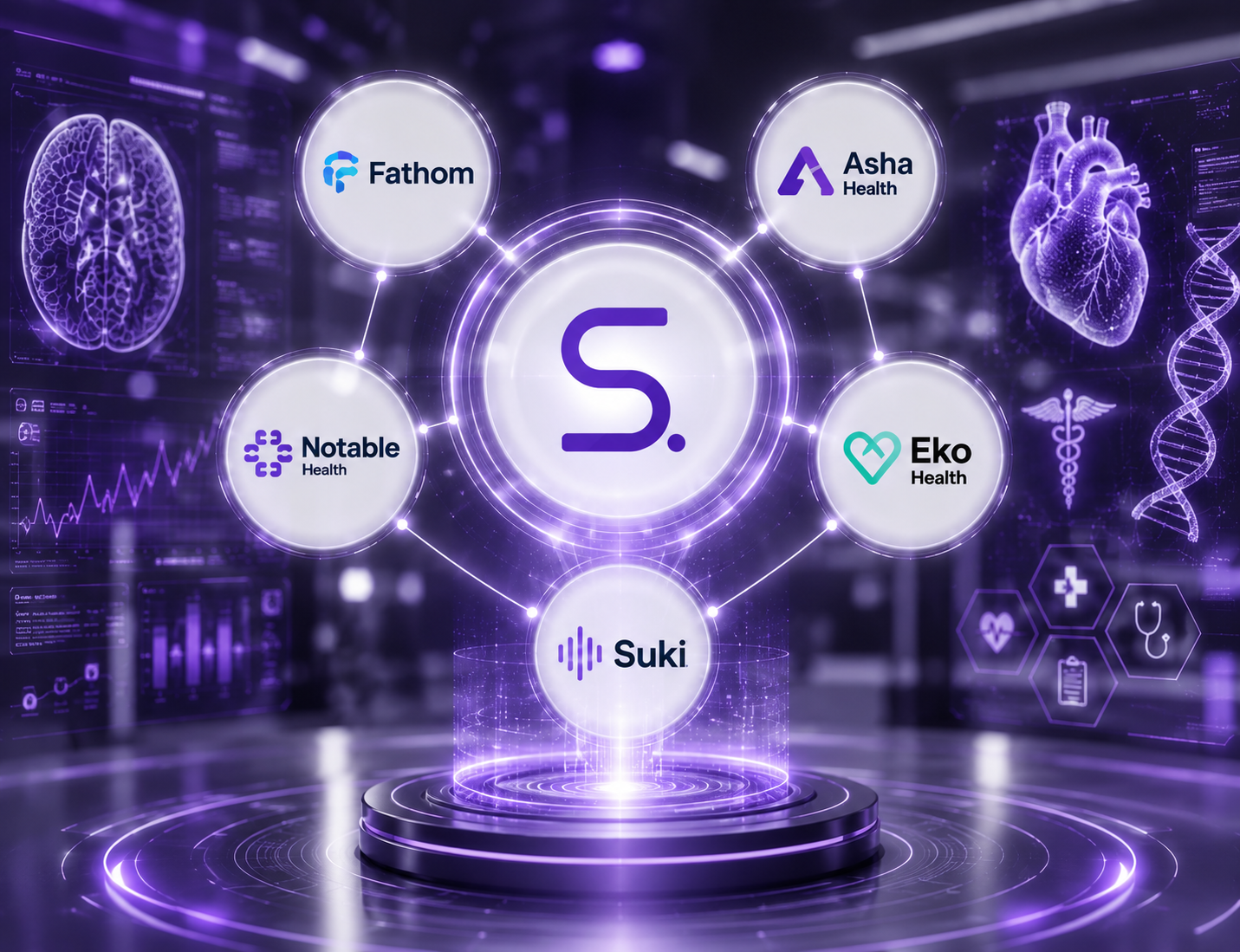
The implications for practicing physicians are significant. Across the domains of clinical documentation, diagnostic support, revenue cycle management, and chronic disease care, AI-enabled tools are delivering quantifiable improvements in efficiency, accuracy, and patient outcomes—without requiring practices to expand headcount or overhaul existing workflows. The following profiles represent five companies from the HNA Healthcare AI Index whose clinical impact data, integration capabilities, and relevance to independent practice warrant the attention of any physician or healthcare administrator seeking to position their organization for sustainable success in an increasingly competitive landscape.
1. Suki — Ambient Documentation at Scale
Among the most persistent sources of professional dissatisfaction cited by practicing physicians is the administrative burden associated with electronic health record documentation. Suki, a voice-enabled AI medical scribe that integrates with major EHR platforms including Epic and athenahealth, addresses this burden through ambient AI technology that transcribes spoken notes in real time and auto-generates SOAP notes, orders, and referral documents during or immediately following clinical encounters.
The clinical impact data associated with Suki's platform is notable in both its magnitude and its specificity. According to the HNA Healthcare AI Index, Suki reduces documentation time by approximately 70%, translating to savings of roughly 3 hours per physician per day. Pilot group data further indicates a 60% reduction in self-reported burnout among physicians using the platform—a finding with direct implications for workforce retention in an era of accelerating physician attrition.
"A virtual scribe that cuts documentation time dramatically—ideal for solo and small group practices."
For independent practices in particular, where administrative tasks disproportionately fall on the physician rather than a dedicated support team, Suki's value proposition is straightforward: it returns clinical time to the clinician. The system continuously adapts to individual physician preferences and voice patterns, improving over time without requiring manual calibration by the end user.
2. Fathom — AI-Powered Medical Coding Automation
Revenue cycle integrity is among the most consequential operational concerns facing private practices. Coding errors—whether through omission, incorrect assignment, or failure to capture billable modifiers and add-on codes—directly erode practice revenue while simultaneously increasing the risk of audit and compliance exposure. Fathom, an AI-based medical coding automation platform, applies deep learning to physician documentation to assign CPT, ICD-10, and modifier codes with a degree of accuracy and throughput that manual coding processes cannot consistently replicate.
The HNA Healthcare AI Index reports that Fathom auto-codes more than 90% of patient visits with greater than 95% accuracy, reducing coding turnaround from days to minutes. Practices utilizing the platform report faster billing cycles, higher coding throughput, and measurable revenue increases attributable to missed units and billable codes identified by the AI that would have otherwise gone uncaptured.
"Fathom lowers coding costs and boosts revenue by catching missed charges. It ensures accuracy, reduces denials, and helps small practices grow without adding staff or risking compliance errors."
The platform's continuous learning architecture is particularly relevant to the private practice context: Fathom adapts to each practice's specific coding patterns and payer mix over time, improving accuracy and alignment with individual specialty norms. For high-volume specialties such as radiology, emergency medicine, and multi-specialty group practices, the reduction in reliance on certified coding personnel represents a meaningful structural cost improvement.
3. Notable Health — Automating the Patient Access Workflow
Patient access—encompassing scheduling, insurance eligibility verification, pre-visit intake, and appointment adherence—represents a significant source of administrative friction in private practice operations. Notable Health addresses this domain through AI-powered robotic process automation that engages patients via text, email, and voice to complete intake forms, confirm appointments, resolve rescheduling requests, and transmit data directly into the EHR without requiring manual staff intervention.
The operational metrics associated with Notable's platform are substantial. According to the HNA Healthcare AI Index, Notable increases pre-visit intake completion rates to greater than 70%, reduces front-desk workload by 50%, and lowers appointment no-show rates by 30%. The downstream effects of these improvements compound: reduced no-shows increase practice revenue capture; higher intake completion rates improve clinical preparedness and reduce visit inefficiency; and decreased front-desk burden allows existing staff to focus on higher-complexity patient interactions.
"Notable helps small practices offer modern digital check-in and scheduling, reduce front-desk workload, and scale patient volume without adding staff."
For private practices facing hiring challenges or seeking to manage overhead without reducing patient volume, Notable's ability to automate patient-facing administrative workflows through AI represents a scalable operational solution that does not require capital investment in additional personnel.
4. Asha Health — AI-Driven Chronic Care Revenue
Chronic disease management represents both a significant clinical challenge and an underutilized revenue opportunity for private practices. The Centers for Medicare and Medicaid Services' Chronic Care Management (CCM) billing program provides reimbursement for non-visit-based chronic care services, yet many independent practices lack the infrastructure to systematically engage chronic patients between appointments or to document the touchpoints required for compliant CCM billing. Asha Health addresses this gap by enabling practices to launch AI-driven virtual chronic care clinics that automate patient follow-up, lifestyle coaching, symptom tracking, and clinical documentation through conversational AI agents.
The clinical and financial outcomes attributed to Asha's platform are particularly compelling for value-based care participants. The HNA Healthcare AI Index indicates that Asha engages 100% of a practice's chronic patient population between visits—a degree of outreach that would be operationally impossible for most independent practices to achieve through staff-driven telephone outreach alone. Practices utilizing the platform have reported a 12% improvement in value-based care performance metrics, a finding with direct implications for practices operating under risk-bearing contracts or quality-incentive arrangements.
"Turns chronic care into a scalable, revenue-generating service—no extra time needed from the physician."
Crucially, Asha's model is structured to operate without additional physician time investment. The AI agents manage routine between-visit engagement autonomously, escalating to the physician only when clinical decision-making is required. The result is a chronic care infrastructure that generates Medicare CCM revenue while improving patient adherence and quality metrics—a combination rarely achievable within traditional practice staffing models.
5. Eko Health — Point-of-Care Cardiac Diagnostics
Cardiac conditions that are missed or delayed in primary care settings represent a significant source of preventable morbidity and downstream healthcare costs. Eko Health has developed FDA-cleared digital stethoscopes paired with an AI-powered platform—the CORE 500 device and SENSORA platform—that analyze cardiac auscultation and ECG signals in real time, providing clinicians with immediate diagnostic support for conditions including murmurs, atrial fibrillation, and low ejection fraction.
The diagnostic accuracy data associated with Eko's platform is clinically meaningful. The HNA Healthcare AI Index reports that Eko's AI detects low ejection fraction with an AUROC of approximately 0.85, has doubled cardiomyopathy diagnoses in maternity clinic settings, and reduces diagnostic misses by 50%. In 2024, Eko became the first company to receive FDA clearance for identifying low ejection fraction through stethoscope-based AI analysis—a milestone that significantly expands the cardiac screening capability available at the point of care without echocardiography.
"Turns a stethoscope into a cardiac screening tool—essential for small clinics without imaging."
For independent primary care practices and internal medicine groups that lack on-site echocardiography or regular access to cardiology consultation, Eko's platform represents a clinically defensible mechanism for enhancing cardiac screening during routine physical examinations. The device's cost and form factor—a handheld stethoscope with a smartphone application—position it as accessible to practices of virtually any size.
Conclusion: A Strategic Imperative for Independent Practices
The five companies profiled above represent a cross-section of the AI-enabled solutions now available to private practice physicians through the HNA Healthcare AI Index. Collectively, they address the most operationally and clinically consequential challenges facing independent practices: documentation burden, coding accuracy, patient access friction, chronic care management scalability, and point-of-care diagnostic capability.
What distinguishes this generation of AI tools from prior waves of healthcare technology is the specificity and verifiability of their clinical impact data, and their explicit design for deployment within the resource constraints of independent and small-group practice settings. Physicians evaluating AI adoption need not approach this landscape as a monolithic or speculative undertaking. The evidence base is accumulating, the integration pathways are maturing, and the operational case—measured in hours reclaimed, revenue captured, and diagnostic misses prevented—is increasingly difficult to dismiss.
The HNA Healthcare AI Index continues to track, evaluate, and profile AI companies with demonstrated relevance to private practice success. Physicians and practice administrators seeking a curated, evidence-oriented framework for navigating AI adoption are encouraged to consult the full Index at www.hna-net.com/healthcare-ai-index.