AI and the Threat to Clinical Mastery: What "Never Skilling" Means for the Future of Medicine
The Expanding Role of AI in Clinical Practice
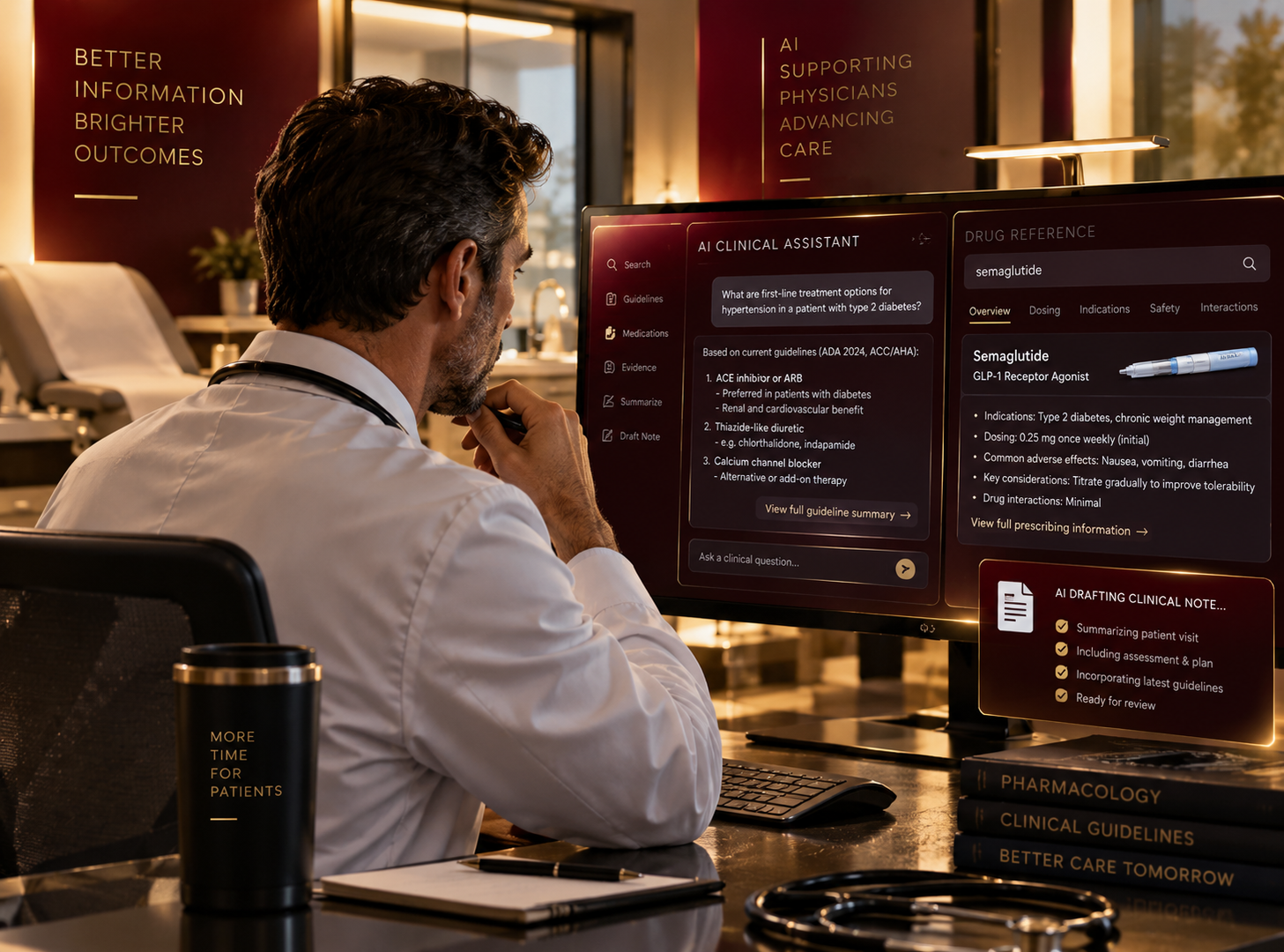
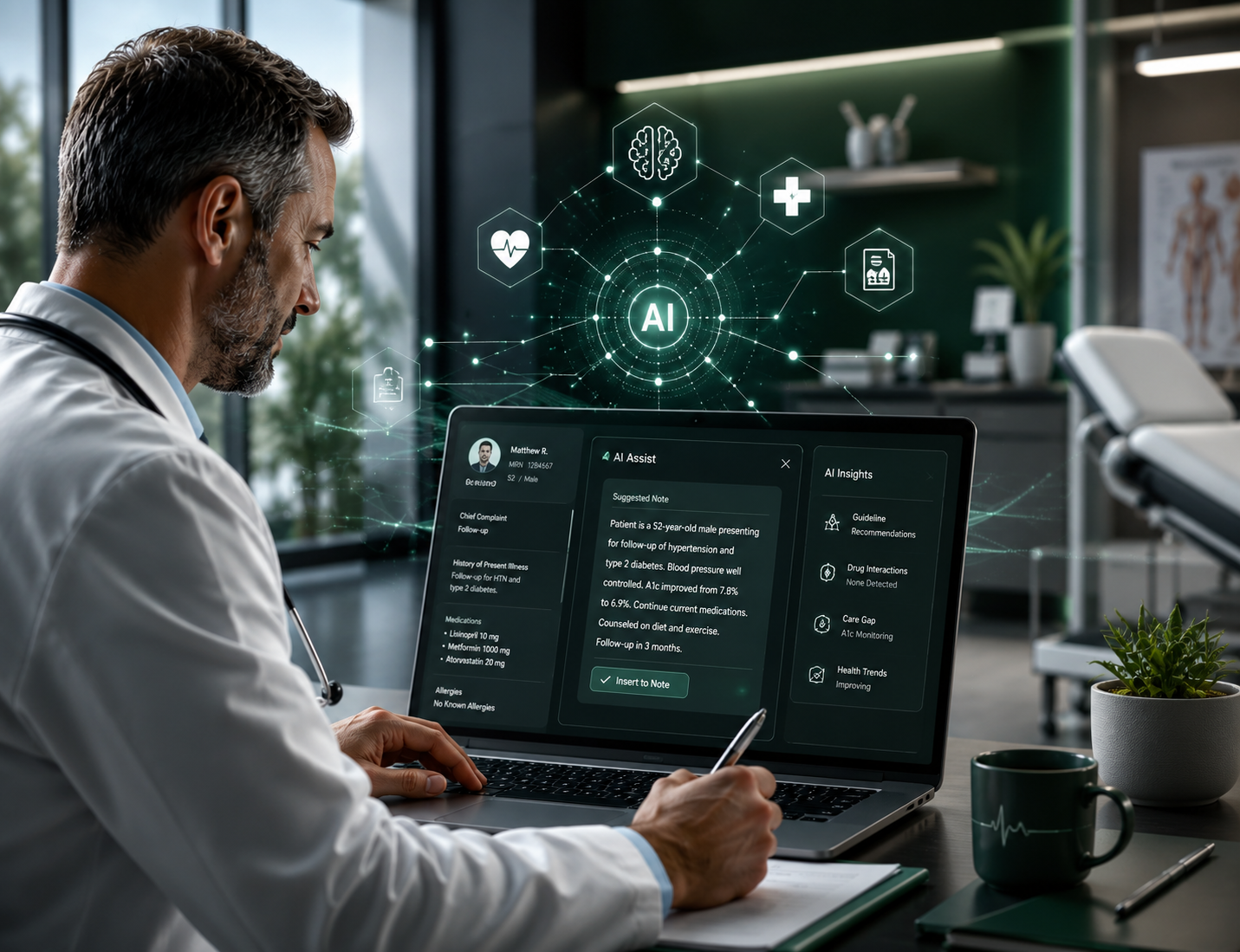
Artificial intelligence has entered the clinical workspace through a familiar door: reducing administrative burden, streamlining documentation, and assisting with simple, well-defined tasks. For busy practitioners, this has been largely welcome. But the trajectory of AI adoption in medicine is accelerating well beyond the inbox and the discharge note. AI systems are now being used to review and synthesize patient data, interpret diagnostic findings, formulate differential diagnoses, and recommend treatment plans.
It is precisely this expansion — from the clerical to the cognitive — that prompted a new JAMA Viewpoint authored by Ron Keren, MD, MPH, Bimal R. Desai, MD, MBI, and Daniel C. West, MD, all from The Children's Hospital of Philadelphia and the Perelman School of Medicine at the University of Pennsylvania. Published online May 7, 2026, the piece is titled Promoting Clinical Expertise in the Age of AI: No Struggle, No Mastery. Its central argument is not that AI is inherently dangerous to clinical care — it is that AI, deployed without educational intentionality, may be silently dismantling the very developmental processes through which physicians learn to think.
Deskilling, Mis-Skilling, and the New Threat of "Never Skilling"
The authors identify three distinct categories of AI-related cognitive risk in medicine, each representing a different stage of clinical development.
The first is deskilling — the gradual erosion of previously acquired competencies when a clinician begins to rely on AI for tasks they once performed independently. A radiologist who stops reading ECGs without AI assist, an internist who defers to algorithmic triage tools rather than clinical gestalt — these represent deskilling in its classical form: capacity built through training and practice, slowly degraded through disuse.
The second risk is mis-skilling — learning the wrong clinical patterns because the AI systems providing feedback are themselves inaccurate. When trainees calibrate their reasoning to flawed AI outputs, they may emerge from training with systematically distorted clinical schema. This risk is particularly relevant given the well-documented variability in AI system accuracy across patient populations and clinical contexts.
But the authors argue that the most consequential risk is the third and least-discussed: the failure to acquire the cognitive foundations of clinical expertise because AI tools provided the answers before the struggle that produces mastery could occur. The authors term this never skilling — a failure of formation, not a failure of retention. The clinician who never develops independent diagnostic reasoning cannot lose it; they simply never had it. This distinction has profound implications for how we think about AI's role in training environments.
The Science of Struggle: Why Productive Difficulty Matters
The Viewpoint's central insight rests on a well-established body of educational science. Research in cognitive psychology and medical education has consistently demonstrated that the effort involved in working through a difficult clinical problem — not the comfort of receiving an immediate answer — is what drives durable learning. Frameworks including mastery learning, deliberate practice, and productive failure all share a common premise: the learner must engage with the limits of their current knowledge before that knowledge can be meaningfully consolidated and expanded.
In the clinical training context, this means that a resident who struggles to generate a differential diagnosis, weighs competing hypotheses, and reaches a conclusion through independent reasoning is not merely demonstrating competence — they are building it. When AI tools are positioned upstream of this struggle — when the differential is already generated before the resident has been asked to construct one — the foundational cognitive work is bypassed, and the learning opportunity is lost.
As clinicians rely on AI for more advanced tasks, concerns have emerged about deskilling (losing previously acquired skills) due to overreliance on AI systems and mis-skilling (learning the wrong things) due to inaccurate AI systems. The authors situate these concerns within a broader framework of clinical expertise development, arguing that educational environments must be designed with explicit awareness of how and when AI is introduced into the learning workflow.
The Paradox of Convenience in Training Environments
There is an inherent tension in deploying AI tools within teaching hospitals and graduate medical education programs. The same features that make AI useful to a senior attending — rapid synthesis of complex data, pattern recognition across large clinical corpora, reduction of cognitive load — are precisely the features that can short-circuit the educational process for a trainee.
The attending with twenty years of clinical experience and a robust internal knowledge base can use an AI-generated differential as a checklist to verify their own thinking. The second-year resident who has not yet formed that internal framework may use the same output as a substitute for thinking, not a complement to it. The tool is identical; the developmental consequences are radically different.
This asymmetry, the authors suggest, demands that training programs move beyond simply restricting or permitting AI access, toward the intentional design of learning experiences that sequence AI support appropriately. The most consequential risk of AI may be the effect on clinicians still in training — medical students, residents, and fellows who have not yet built the expertise that established physicians stand to lose. This is not an argument against AI in medical education. It is an argument for educational architecture that is as thoughtfully engineered as the AI tools themselves.
Implications for Program Directors and Clinical Leaders
For physician leaders, residency program directors, and clinical informaticists, this Viewpoint raises several concrete questions that cannot be deferred. First, how are AI tools currently being used in your training environment, and at what point in the clinical reasoning process do trainees encounter them? Second, have educational objectives been updated to account for the presence of AI assistants during case workup, differential generation, and management planning? Third, are assessment structures — OSCEs, case conferences, clinical evaluations — being redesigned to include AI-off conditions that test independent reasoning?
The article's title — No Struggle, No Mastery — encapsulates a pedagogical principle that predates AI and will outlast any particular model or platform. The challenge for medical education today is to preserve the conditions under which that struggle can occur, even as the tools available to eliminate it become increasingly capable and ubiquitous. As the authors note: AI is increasingly being used to review and summarize data, interpret findings, formulate diagnoses, and develop treatment plans. Each of these is a task that, in a training context, represents a learning opportunity — one that can be supported or supplanted by AI, depending entirely on how the educational environment is designed.
Conclusion
The concern at the heart of this Viewpoint is ultimately not technological — it is developmental. The question is not whether AI can diagnose accurately (in many domains it already can), but whether the next generation of physicians will be capable of independent clinical reasoning when AI is unavailable, uncertain, or wrong. The authors from Children's Hospital of Philadelphia and Penn Medicine are clear: that capability is not innate, it is constructed through the productive difficulty of clinical training. Protecting it in the age of AI is not optional — it is the defining educational challenge of this moment in medicine.